Getting started with reinvention is hard. Sustaining it over the months and years it actually takes is harder.
The initial clarity — the energy that comes from finally deciding to move — is real. But it’s temporary. At some point the novelty wears off. Progress slows. The people around you express skepticism, concern, or outright opposition. The world, indifferent to your personal transformation project, keeps throwing complications at you.
This is where most reinventions quietly die. Not through a dramatic reversal. Through gradual erosion. Energy gets redirected. Priorities shift. The goal that felt urgent six months ago gets filed under “eventually.” And eventually never comes.
**The Hidden Drain on Your Energy**
One of the most reliable drains on reinvention momentum is one that rarely gets named: managing other people’s reactions to your choices.
The colleague who thinks you’re making a mistake. The family member whose concern sounds suspiciously like disapproval. The friend who keeps asking whether you’ve really thought this through. These interactions cost more than they appear to. Each one requires you to defend, explain, or justify a decision you’ve already made and are already living with.
Over time, the accumulated weight of others’ skepticism can do more damage to your momentum than any practical obstacle.
The reorientation that helps is simple but not easy: you cannot control how other people respond to your reinvention, and attempting to do so is a significant waste of finite energy. Their reaction is data about them, not a verdict on your choices. The people whose opinions actually deserve weight in your decision-making are a small group — those who know your situation well, genuinely want good things for you, and have relevant experience. Everyone else’s reaction, however confidently expressed, doesn’t need to be processed as meaningful feedback.
**Resilience as a Practice**
Here’s something worth understanding: resilience during reinvention isn’t a trait you either have or don’t. It’s a set of practices — and like every other practice in *Rebuilt*, it can be built deliberately.
That means responding rather than reacting to setbacks. It means building physical anchors — regular exercise, consistent sleep, the small daily routines that keep your nervous system from running at a permanent red line — because the people who maintain these practices during high-stress transitions consistently report greater emotional steadiness than those who deprioritise them exactly when they’re most needed.
It also means building what the book calls deliberate joy: intentional sources of energy and pleasure that exist separately from the transition itself. Hobbies. Relationships. Projects that exist for their own sake. Not as rewards for progress, but as non-negotiable parts of the structure of your days.
**The Consistency That Compounds**
The people who make it through to the other side of reinvention are not the ones who avoided difficulty. They’re the ones who found a way to stay in motion when the difficulty arrived — as it always does.
They built systems rather than relying on motivation. They kept their range of identity anchors intact. They stopped trying to bring the skeptics around. And they kept moving.
None of that is glamorous. All of it works.
—
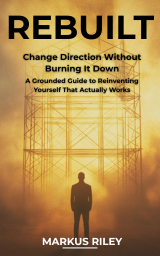
*Most reinventions don’t fail dramatically. They erode quietly.* **Rebuilt** gives you the resilience practices that keep your momentum alive — through the long middle, the skeptics, and everything the world throws at you along the way.
** Click the cover below to learn more and get your copy now.**